The Stitching Gap: Tirupur's Manpower Crisis and Uttar Pradesh's Textile Renaissance
Share Post
Tirupur, the undisputed "Knitwear Capital of India," is facing a challenge threatening its very fabric: a severe and persistent shortage of skilled and unskilled manpower. As highlighted in Neha Diwan's June 2025 ET Online article, this crisis is no longer a seasonal blip but a structural fault line causing production delays, order cancellations, and unsustainable wage inflation, eroding the cluster's global competitiveness.
Tirupur's Manpower Quandary: A Deep Dive
- The Exodus & The Disinterest: Post-pandemic, a significant portion of Tirupur's workforce, primarily migrants from states like Uttar Pradesh, Bihar, Odisha, and West Bengal, returned home and have been reluctant to return. Simultaneously, local Tamil youth increasingly shun textile jobs, seeking opportunities in IT, services, or preferring higher education, viewing factory work as low-status and arduous.
- Demographic Drought: Tirupur lacks a large, readily available local population pool to draw from. The region's own demographic transition means fewer young people entering the workforce willing to take up factory roles.
- Skill Specificity: Tirupur's strength lies in complex knitted garment production – requiring specific skills like knitting machine operation, stitching (especially intricate designs), quality checking, and finishing. Finding workers proficient in these areas has become exceptionally difficult.
- Work Culture & Wage Inflation: The industry often demands long hours, especially during peak seasons, and faces cyclical fluctuations. This instability deters workers. The acute shortage has forced wages up by 25-30% over the past few years (as reported by Diwan), squeezing already thin manufacturer margins. Intense competition for the limited available workforce leads to high attrition ("job hopping").
- Impact: The consequences are stark: production lines running below capacity (estimated at 70-75% utilization), delayed shipments leading to penalties and loss of trust with international buyers, inability to scale up to meet demand, and ultimately, a potential loss of market share to competitors like Bangladesh, Vietnam, and even other Indian states.
The Uttar Pradesh Contrast: Untapped Potential and Migrating Skills
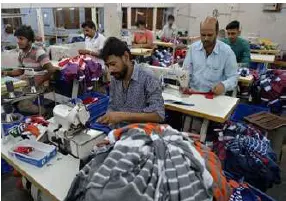 While Tirupur struggles, Uttar Pradesh (UP), India's most populous state, possesses immense latent potential as a textile hub but faces its own set of challenges regarding skill utilization and migration: Existing Clusters & Focus:
NCR (Noida, Greater Noida, Ghaziabad): Focuses heavily on apparel exports, home textiles, and synthetic fabrics. Benefits from proximity to Delhi, logistics, and some higher-end manufacturing.
Kanpur: Historically the "Leather City," it has a significant textile base in leather goods and is reviving its traditional cotton/textile spinning and weaving heritage.
Agra: Known for leather goods (especially footwear) and increasingly for apparel and handicraft-based textiles.
Varanasi / Bhadohi: World-renowned for handloom silk sarees (Banarasi) and carpets. Centers of exquisite craftsmanship.
Other Centers: Bareilly (printing), Meerut (sports goods with textile components), Moradabad (home furnishings, brass with textile elements).
The Migration Paradox & Skill Availability:
Abundant Raw Labor: UP has a massive young population entering the workforce annually. A significant portion seeks employment outside agriculture.
Skill Gap: While traditional handloom skills (Varanasi, Bhadohi) are world-class, there's a relative scarcity of workers trained in organized, factory-based garment manufacturing processes (mass stitching, machine knitting operation, industrial finishing) compared to Tirupur's ecosystem. Basic tailoring skills are widespread but not necessarily aligned with export-quality, high-volume production standards.
Push Factors from UP: Lack of sufficient local employment opportunities matching aspirations, perception of better wages in South India (even considering living costs), and sometimes, inadequate infrastructure/supporting ecosystem in UP's emerging industrial areas drive this migration.
Pull Factors to Tirupur: Established industry ecosystem, higher (nominal) wages compared to local UP options (though cost of living is higher), and established migration networks.
Comparison: Tirupur vs. UP Clusters
|
Feature |
Tirupur (Tamil Nadu) |
UP Clusters (NCR, Kanpur, Agra, etc.) |
Varanasi/Bhadohi (UP Special) |
|
Core Strength |
Knitted Garment Export Hub |
(Diversified Apparel, Home Textiles, Leather, Handlooms) |
Banarasi Silk, Carpets (Handloom) |
|
Manpower Availability |
Severe Shortage (Skilled & Unskilled) |
Large Pool Available (Especially unskilled) |
Skilled Artisans (Handloom specific) |
|
Key Manpower Issue |
Exodus of migrants, Local disinterest, High attrition |
Skill Gap in factory garmenting, Outward Migration |
Preservation of craft, Scaling issues |
|
Wage Pressure |
Very High (25-30% recent inflation) |
Moderate/Lower |
Varies (Artisan wages often low) |
|
Skill Base |
Highly Skilled in Knit Garment Production |
Developing in Factory Garmenting; Strong in Handloom |
World-Class Artisan Skills |
|
Migration Trend |
Net Importer of labor (Especially from UP, Bihar) |
Net Exporter of labor (To TN, Gujarat, South) |
Limited migration for core skills |
|
Local Workforce |
Limited local uptake of textile jobs |
Large local workforce seeking non-farm jobs |
Strong local artisan communities |
|
Infrastructure |
Mature, but strained |
Improving rapidly (Expressways, Dedicated Freight Corridor) |
Needs significant upgrade |
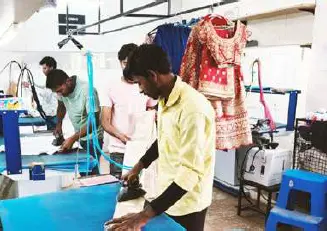
Uttar Pradesh is rapidly positioning itself as the next frontier in India’s textile sector, leveraging its vast local workforce, strategic location, and strong government backing. Unlike Tirupur, which is grappling with severe labor shortages and rising wage inflation due to over-reliance on migrant labor, UP offers a homegrown solution. With a massive, young, and trainable population, the state can supply stable manpower, reduce attrition by enabling employment closer to home, and even welcome back experienced workers returning from textile hubs like Tirupur and Gujarat. This creates a more sustainable and cost-effective labor model. Additionally, the UP Textile & Apparel Policy provides robust financial incentives capital subsidies, power rebates, and skill development support through institutions like NIFT and ATDC further reducing operational burdens for investors.
Adding to this advantage is the infrastructural momentum powered by initiatives like the PM MITRA Park in the Lucknow-Hardoi node, offering integrated, world-class facilities including plug-and-play factories and logistics support. UP’s proximity to raw materials like cotton and sugarcane, along with enhanced connectivity via the Dedicated Freight Corridor and expressway networks, makes it an ideal hub for both domestic and export-oriented production. This growing ecosystem is also attracting ancillary units and service providers, creating a self-sustaining industrial landscape. As Tirupur's challenges highlight the risks of migration-dependent growth, UP emerges as a strong alternative, ready to reverse the workforce migration trend and shape a more resilient, inclusive, and globally competitive future for India's textile industry.
05:27 PM, Dec 15
Source : The Stitching Gap: Tirupur's Manpower Crisis and Uttar Pradesh's Textile Renaissance
Other Related Topics